
Parm Sangha, co-founder
Why consent-first, rights-cleared media is becoming a commercial necessity and how Mimo supplies it
For the teams building, tuning and evaluating AI models, the binding constraint has shifted. Compute is expensive but obtainable. Talent is scarce but findable. The real constraint is data: authentic, high-quality, legally defensible data. And the way that data has traditionally been acquired is coming to an end.
Three pressures are converging on every data acquisition strategy.
The first is legal. The court results so far are mixed, but the direction is not. A US court found that training on lawfully acquired books can constitute fair use, yet Anthropic still agreed a $1.5 billion settlement with authors over pirated copies. The New York Times’ case against OpenAI continues, with courts compelling the production of training-related evidence at scale. The lesson for any AI team is that how you acquired your data now matters as much as what you do with it.
The second is regulatory. Since 2 August 2025, the EU AI Act has required providers of general-purpose AI models to maintain a copyright compliance policy and publish a sufficiently detailed summary of their training content, using the template issued by the EU AI Office. Enforcement powers apply from August 2026. In the UK, the Data (Use and Access) Act 2025 has committed the government to formal reports on copyright and AI. Wherever you operate, provenance is becoming a compliance artefact, not a nice-to-have.
The third is technical. The open web is a diminishing resource: picked over, heavily duplicated and increasingly polluted by synthetic output. Training models on the output of other models degrades them (some call it "distillation"), a failure mode the research community calls model collapse.The market has responded with a rapidly growing licensing economy, but most of it recycles the same professional content: news archives, stock imagery, academic publishing.
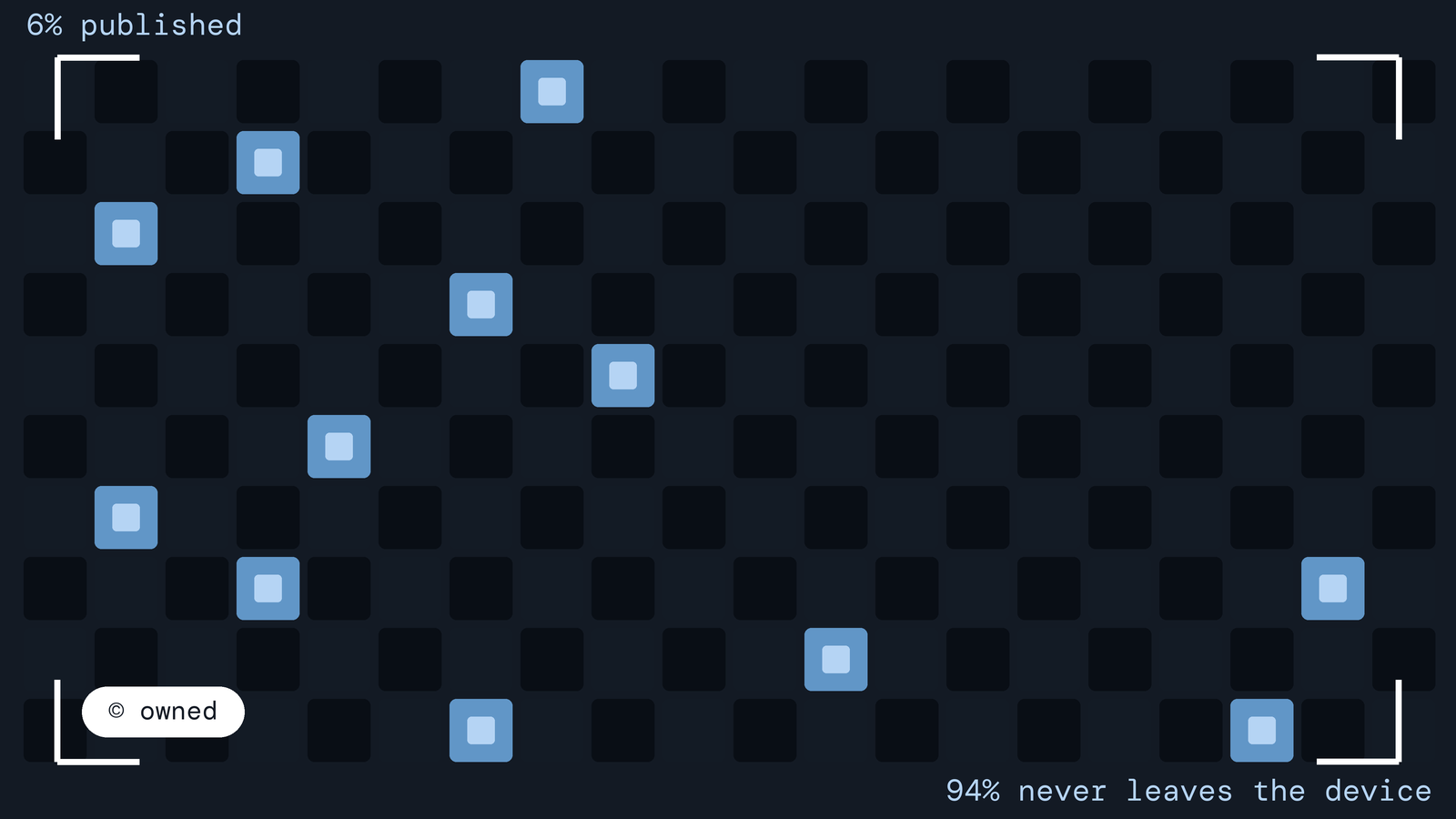
Roughly 94% of consumer photos and clips ever reaches the public internet. It sits on smartphones and in private storage: spontaneous, emotionally rich, contextually grounded records of real human experience. This is precisely the high-signal, non-synthetic, multi modal data that models increasingly need and it cannot be scraped because it was never published.
The only way to reach it is to ask. And asking, at scale, requires infrastructure for consent.
Mimo is a consent-first marketplace for private media. Creators and fans upload their content, have its originality and copyright ownership verified and choose to sell, license or give permissioned access to it, including opting in to make it available for AI training. For AI teams, that design translates into five properties that scraped data cannot offer.
1. Provenance and authenticity: content is verified as original and non-tampered, sourced from the person who captured it.
2. Consent at the asset level: every item carries an explicit, recorded opt-in from its rights holder for AI training use. There are no implied licences to argue about later.
3. Rights cleared for training: copyright is verified and licensed through the platform, with a revenue share flowing back to creators. That makes the supply renewable. This provides an additional incentive for contributors to keep contributing.
4. Auditability: the licence chain behind every dataset is documented, mapping directly onto the disclosures the EU AI Act now requires.
5. Freshness and diversity: a continuously replenished stream of real-world, multimodal media from global audiences, not a static archive.
We chose sports and entertainment as the beachhead deliberately. Fans are among the most emotionally engaged, highest-consent audiences anywhere. The live events generate dense, varied, multi modal media in enormous volumes. Once the consent loop runs there, it extends naturally to every domain where human experience has commercial value.
Mimo is out of stealth with our v2 platform prototype finalised and two AI patents in the pipeline. We are opening our priority registry for forward-thinking AI teams and enterprise partners to secure data allocation before the network goes live. Early registrants will help shape dataset taxonomies, delivery formats and licensing terms.
If your roadmap depends on data you can defend, commercially, legally and ethically, register your interest on the Mimo website.